We discovered that the nopal cactus grows in Quebec. This variety is edible and is used as a vegan taco filling. Kevin from Lili et Gordo met Guillaume at the greenhouses of Le Cactus Fleuri in Sainte-Marie-Madeleine. We discussed the plant's growth and how to cook it like they do in Mexico. We're currently at Le Cactus Fleuri in Sainte-Marie-Madeleine, near Saint-Hyacinthe.
***TRANSCRIPTION***
We discover the nopal cactus of Quebec
Hello everyone!
Today, we made a discovery of something really special.
It was discovered that there were cacti, in fact, nopales, growing in greenhouses in Quebec.
I met Guillaume.
Hello!
Guillaume is going to tell us a little bit about all the fresh cacti, the nopales, everything that is edible, it's a whole world.
Yes, really, really, it's quite surprising and what I understood is that on your side at Lili and Gordo's you cook it, in fact.
Yes, we have a cactus mixiote.
So nopal is a taco filling that is vegan.
From what I understand, this is something that is quite common in Mexico, but when we introduce it here in Quebec, people are always surprised.
So yes, the nopal, what makes the plant interesting?
One is its growth because a cactus like this one, as you can see here at the top, has lots of new pads and every time you remove pads, the plant tends to want to reproduce them and it is one of the fastest producing cacti.
This is one of the reasons why yes, we use it in cooking, but I'm sure you've already heard that we're even using ethanol now for really other types of uses.
So, what makes it very interesting to us is its growth.
This applies equally to us here as producers and to the customer at home who says, I would like to eat that.
We cut a little bit and two, three weeks later, we are able to have a fairly continuous production in the summer.
Is it a vegetable?
In fact, here it is considered a plant for us, but around the world some regions might consider it a vegetable.
So, that's what makes it a bit surprising.
Wow, that's really interesting, doesn't it sting?
It depends, you have to be careful.
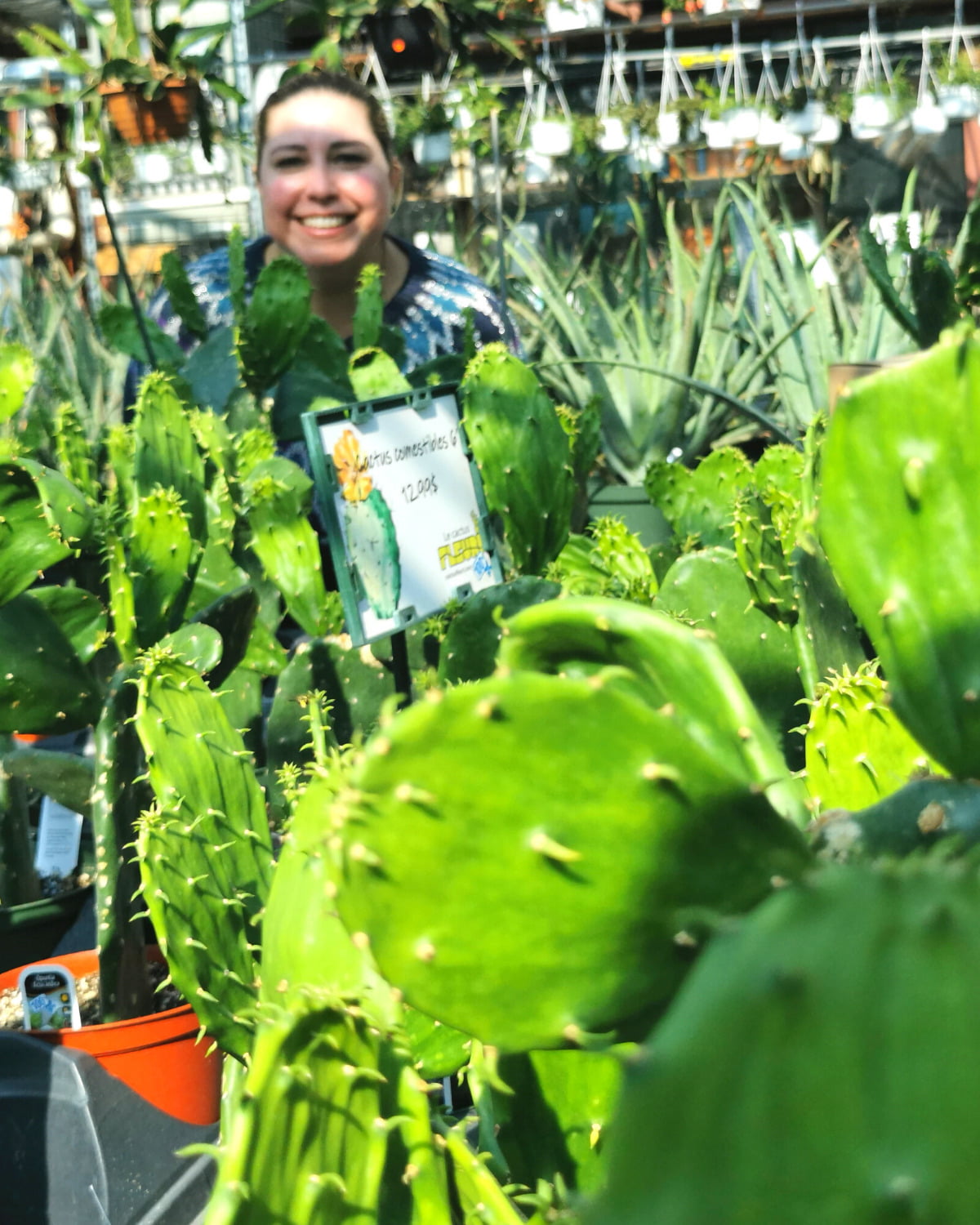
It doesn't look like it stings, but there may still be some tiny stingers.
So, if we look closely at the white dots, we can see a few.
So, when we work with this cactus, what's fun is that there are far fewer prickles than other opuntias which are very unpleasant, but we still have to be careful, we'll tend to remove all the white spots so that we can eat it afterwards.
These are called halos, that's where we'll see the spikes.
Wow, so we could take that and let it grow and develop, then cook it at home afterwards?
Absolutely, that's how we suggest it to people, it's really a way to cultivate and produce it.
Are you the only ones in Quebec doing this?
In Quebec, yes, it really will be here. Le Cactus Fleuri is the only wholesale producer of cacti and succulents.
After that, it's certain that it grows more and more in the cactus, it has become super trendy, but yes in Quebec, Le Cactus Fleuri since 1976, it is the only producer of cacti and succulent plants.
Does it grow quickly?
That one is definitely among the fastest.
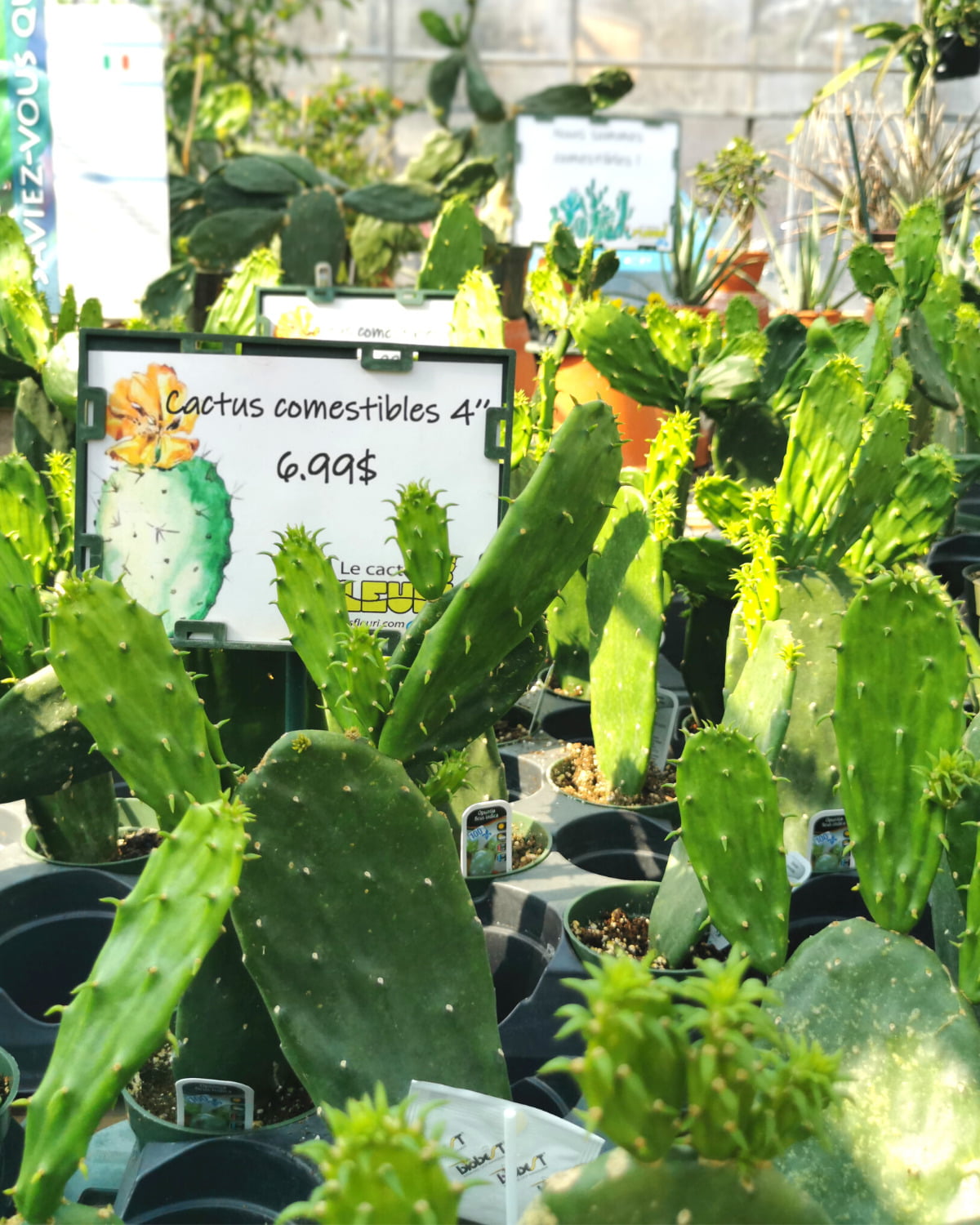
You see snowshoes that have started to grow, little snowshoes like this here, you leave it there let's say in winter, it's a little slower, but in summer, a snowshoe like you have here in two, three weeks it has grown.
And how long does it take for the big ones over there to arrive?
Well, that's it, then there are the years, but there's also the fact that we remove a lot of snowshoes so the time can become variable, but I would tell you that here, these are snowshoes that have been cut and planted, that are about a year, a year and a half old and after that you can go and get them there it can be three, four, five years old.
You can see it in the bark that is growing, it defines it, there are people who are even afraid of it, who look at their cactus, who say, there is brown at the bottom.
He's starting to have trouble, he might be sick.
On the contrary, it becomes woody, like a tree.
So those ones, we're going to see more of a three to five year lifespan behind them.
Wow, that's hot, really fascinating.
We're going to take this with us, we're going to go and make some recipes.
Lili, I think she'll know what to do with it, I'm not the one who's going to take care of it, but wow I can't wait.
Lili, what are you going to do with this?
I'm going to grill it now that BBQ season is starting.
Grilled, have you ever tried it?
Like a burger, grilled on the BBQ with cheese and sides, or in a grilled cactus salad.
I've seen grilled recipes before, but no, I've never tried it, and with the nice temperatures coming, I think it's really worth discovering.
It's time to get the BBQ out.
Well, here it's summer all year round, it's hot.
Yeah, but still, outside we've had some nice temperatures that make us think we should get the BBQ out.
In Quebec, as soon as it's ten degrees outside, summer has arrived, it's not like in Mexico.
Listen Guillaume, thank you, a great discovery.
Listen, I really didn't know you could find fresh nopal here in Quebec, that's just wow.
It's a pleasure and thank you to the rest of you for coming to introduce yourselves to us; I, myself, have never tasted Lili and Gordo.
I know you're leaving a little bit here, so we'll enjoy it and I'm sure that with enthusiasts like you, it's going to be delicious.
Thank you very much Guillaume, and where are you located?
We are here at 1850 North-West Range in Sainte-Marie-Madeleine.
Sainte-Marie-Madeleine is about 30 to 40 minutes from Montreal, about 20 to 30 minutes from Drummondville, but we are very close to Saint-Hyacinthe and Saint-Hilaire, between the two.
Anyway, thank you, we're leaving with several and we're going to go cook that.
Great, have a good day everyone!
Thank you, bye!


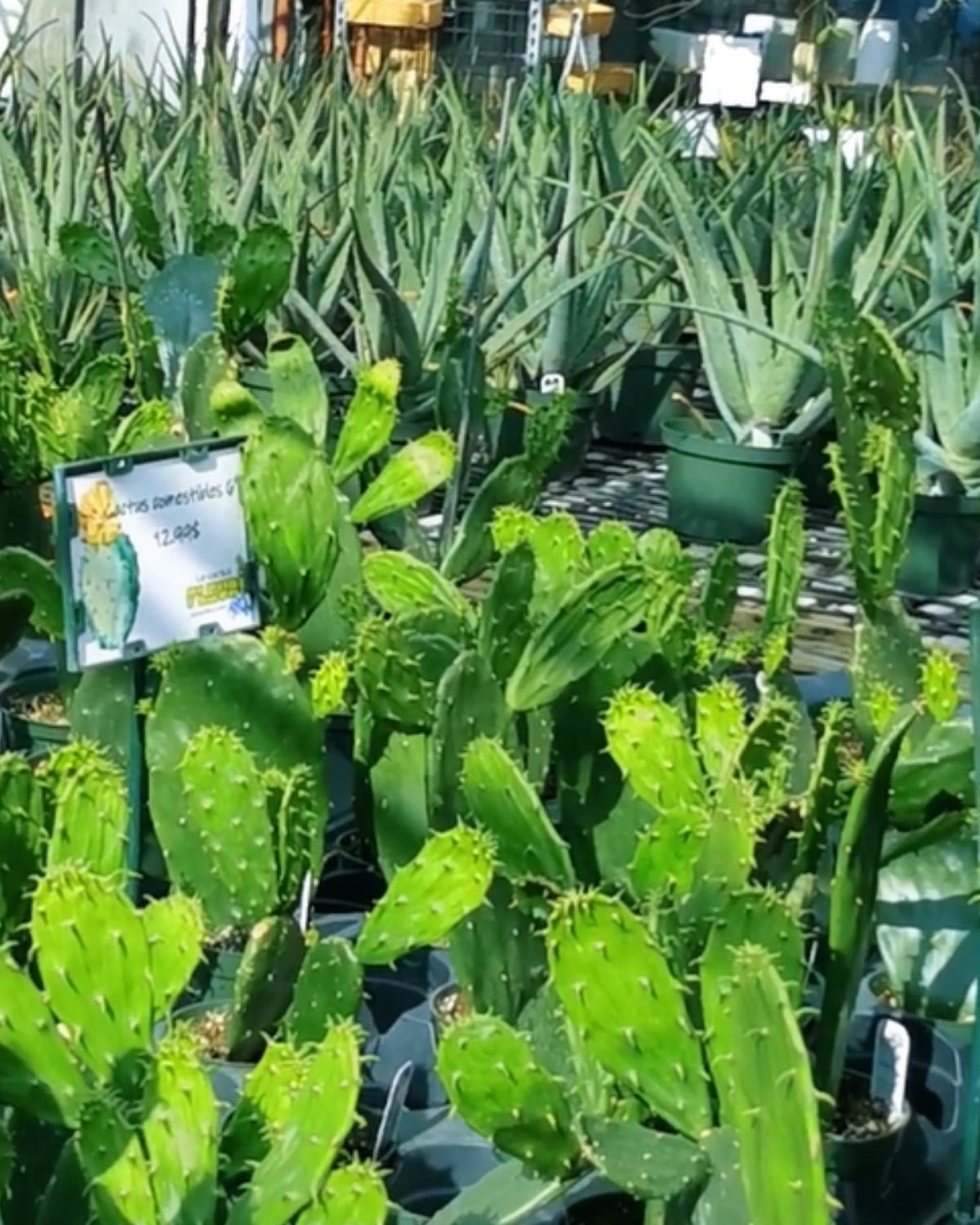 So yes, the nopal, what makes the plant interesting?
One is its growth because a cactus like this one, as you can see here at the top, has lots of new pads and every time you remove pads, the plant tends to want to reproduce them and it is one of the fastest producing cacti.
This is one of the reasons why yes, we use it in cooking, but I'm sure you've already heard that we're even using ethanol now for really other types of uses.
So, what makes it very interesting to us is its growth.
This applies equally to us here as producers and to the customer at home who says, I would like to eat that.
We cut a little bit and two, three weeks later, we are able to have a fairly continuous production in the summer.
So yes, the nopal, what makes the plant interesting?
One is its growth because a cactus like this one, as you can see here at the top, has lots of new pads and every time you remove pads, the plant tends to want to reproduce them and it is one of the fastest producing cacti.
This is one of the reasons why yes, we use it in cooking, but I'm sure you've already heard that we're even using ethanol now for really other types of uses.
So, what makes it very interesting to us is its growth.
This applies equally to us here as producers and to the customer at home who says, I would like to eat that.
We cut a little bit and two, three weeks later, we are able to have a fairly continuous production in the summer.
 Is it a vegetable?
In fact, here it is considered a plant for us, but around the world some regions might consider it a vegetable.
So, that's what makes it a bit surprising.
Wow, that's really interesting, doesn't it sting?
It depends, you have to be careful.
It doesn't look like it stings, but there may still be some tiny stingers.
So, if we look closely at the white dots, we can see a few.
So, when we work with this cactus, what's fun is that there are far fewer prickles than other opuntias which are very unpleasant, but we still have to be careful, we'll tend to remove all the white spots so that we can eat it afterwards.
These are called halos, that's where we'll see the spikes.
Is it a vegetable?
In fact, here it is considered a plant for us, but around the world some regions might consider it a vegetable.
So, that's what makes it a bit surprising.
Wow, that's really interesting, doesn't it sting?
It depends, you have to be careful.
It doesn't look like it stings, but there may still be some tiny stingers.
So, if we look closely at the white dots, we can see a few.
So, when we work with this cactus, what's fun is that there are far fewer prickles than other opuntias which are very unpleasant, but we still have to be careful, we'll tend to remove all the white spots so that we can eat it afterwards.
These are called halos, that's where we'll see the spikes.
 Wow, so we could take that and let it grow and develop, then cook it at home afterwards?
Absolutely, that's how we suggest it to people, it's really a way to cultivate and produce it.
Are you the only ones in Quebec doing this?
In Quebec, yes, it really will be here. Le Cactus Fleuri is the only wholesale producer of cacti and succulents.
After that, it's certain that it grows more and more in the cactus, it has become super trendy, but yes in Quebec, Le Cactus Fleuri since 1976, it is the only producer of cacti and succulent plants.
Does it grow quickly?
That one is definitely among the fastest.
You see snowshoes that have started to grow, little snowshoes like this here, you leave it there let's say in winter, it's a little slower, but in summer, a snowshoe like you have here in two, three weeks it has grown.
And how long does it take for the big ones over there to arrive?
Well, that's it, then there are the years, but there's also the fact that we remove a lot of snowshoes so the time can become variable, but I would tell you that here, these are snowshoes that have been cut and planted, that are about a year, a year and a half old and after that you can go and get them there it can be three, four, five years old.
You can see it in the bark that is growing, it defines it, there are people who are even afraid of it, who look at their cactus, who say, there is brown at the bottom.
He's starting to have trouble, he might be sick.
On the contrary, it becomes woody, like a tree.
So those ones, we're going to see more of a three to five year lifespan behind them.
Wow, that's hot, really fascinating.
We're going to take this with us, we're going to go and make some recipes.
Lili, I think she'll know what to do with it, I'm not the one who's going to take care of it, but wow I can't wait.
Lili, what are you going to do with this?
I'm going to grill it now that BBQ season is starting.
Grilled, have you ever tried it?
Like a burger, grilled on the BBQ with cheese and sides, or in a grilled cactus salad.
I've seen grilled recipes before, but no, I've never tried it, and with the nice temperatures coming, I think it's really worth discovering.
It's time to get the BBQ out.
Well, here it's summer all year round, it's hot.
Yeah, but still, outside we've had some nice temperatures that make us think we should get the BBQ out.
In Quebec, as soon as it's ten degrees outside, summer has arrived, it's not like in Mexico.
Listen Guillaume, thank you, a great discovery.
Listen, I really didn't know you could find fresh nopal here in Quebec, that's just wow.
It's a pleasure and thank you to the rest of you for coming to introduce yourselves to us; I, myself, have never tasted Lili and Gordo.
I know you're leaving a little bit here, so we'll enjoy it and I'm sure that with enthusiasts like you, it's going to be delicious.
Thank you very much Guillaume, and where are you located?
We are here at 1850 North-West Range in Sainte-Marie-Madeleine.
Sainte-Marie-Madeleine is about 30 to 40 minutes from Montreal, about 20 to 30 minutes from Drummondville, but we are very close to Saint-Hyacinthe and Saint-Hilaire, between the two.
Anyway, thank you, we're leaving with several and we're going to go cook that.
Great, have a good day everyone!
Thank you, bye!
Wow, so we could take that and let it grow and develop, then cook it at home afterwards?
Absolutely, that's how we suggest it to people, it's really a way to cultivate and produce it.
Are you the only ones in Quebec doing this?
In Quebec, yes, it really will be here. Le Cactus Fleuri is the only wholesale producer of cacti and succulents.
After that, it's certain that it grows more and more in the cactus, it has become super trendy, but yes in Quebec, Le Cactus Fleuri since 1976, it is the only producer of cacti and succulent plants.
Does it grow quickly?
That one is definitely among the fastest.
You see snowshoes that have started to grow, little snowshoes like this here, you leave it there let's say in winter, it's a little slower, but in summer, a snowshoe like you have here in two, three weeks it has grown.
And how long does it take for the big ones over there to arrive?
Well, that's it, then there are the years, but there's also the fact that we remove a lot of snowshoes so the time can become variable, but I would tell you that here, these are snowshoes that have been cut and planted, that are about a year, a year and a half old and after that you can go and get them there it can be three, four, five years old.
You can see it in the bark that is growing, it defines it, there are people who are even afraid of it, who look at their cactus, who say, there is brown at the bottom.
He's starting to have trouble, he might be sick.
On the contrary, it becomes woody, like a tree.
So those ones, we're going to see more of a three to five year lifespan behind them.
Wow, that's hot, really fascinating.
We're going to take this with us, we're going to go and make some recipes.
Lili, I think she'll know what to do with it, I'm not the one who's going to take care of it, but wow I can't wait.
Lili, what are you going to do with this?
I'm going to grill it now that BBQ season is starting.
Grilled, have you ever tried it?
Like a burger, grilled on the BBQ with cheese and sides, or in a grilled cactus salad.
I've seen grilled recipes before, but no, I've never tried it, and with the nice temperatures coming, I think it's really worth discovering.
It's time to get the BBQ out.
Well, here it's summer all year round, it's hot.
Yeah, but still, outside we've had some nice temperatures that make us think we should get the BBQ out.
In Quebec, as soon as it's ten degrees outside, summer has arrived, it's not like in Mexico.
Listen Guillaume, thank you, a great discovery.
Listen, I really didn't know you could find fresh nopal here in Quebec, that's just wow.
It's a pleasure and thank you to the rest of you for coming to introduce yourselves to us; I, myself, have never tasted Lili and Gordo.
I know you're leaving a little bit here, so we'll enjoy it and I'm sure that with enthusiasts like you, it's going to be delicious.
Thank you very much Guillaume, and where are you located?
We are here at 1850 North-West Range in Sainte-Marie-Madeleine.
Sainte-Marie-Madeleine is about 30 to 40 minutes from Montreal, about 20 to 30 minutes from Drummondville, but we are very close to Saint-Hyacinthe and Saint-Hilaire, between the two.
Anyway, thank you, we're leaving with several and we're going to go cook that.
Great, have a good day everyone!
Thank you, bye!